How AI works
Two diagrams for the decision you are about to make.
Most AI decisions go wrong because nobody has drawn the thing being bought. These are the drawings: where the new layer sits in the technology you already run, and what happens to a single request inside it. Both come from systems we run in production.
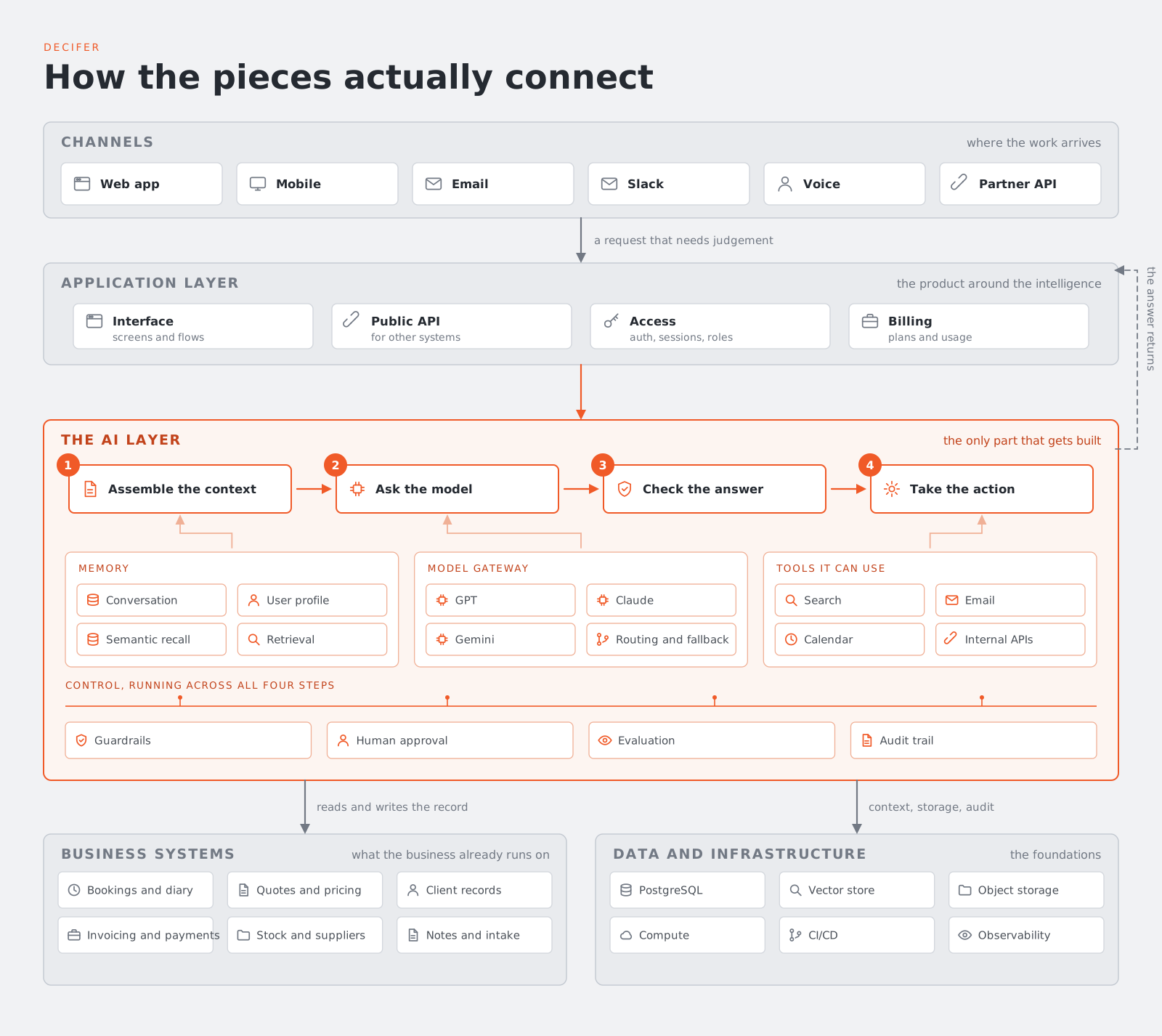
Diagram 1
Where AI sits in what you already run
AI is not a replacement for your technology stack. It is one new layer added between the screens your people use and the systems that hold the record.
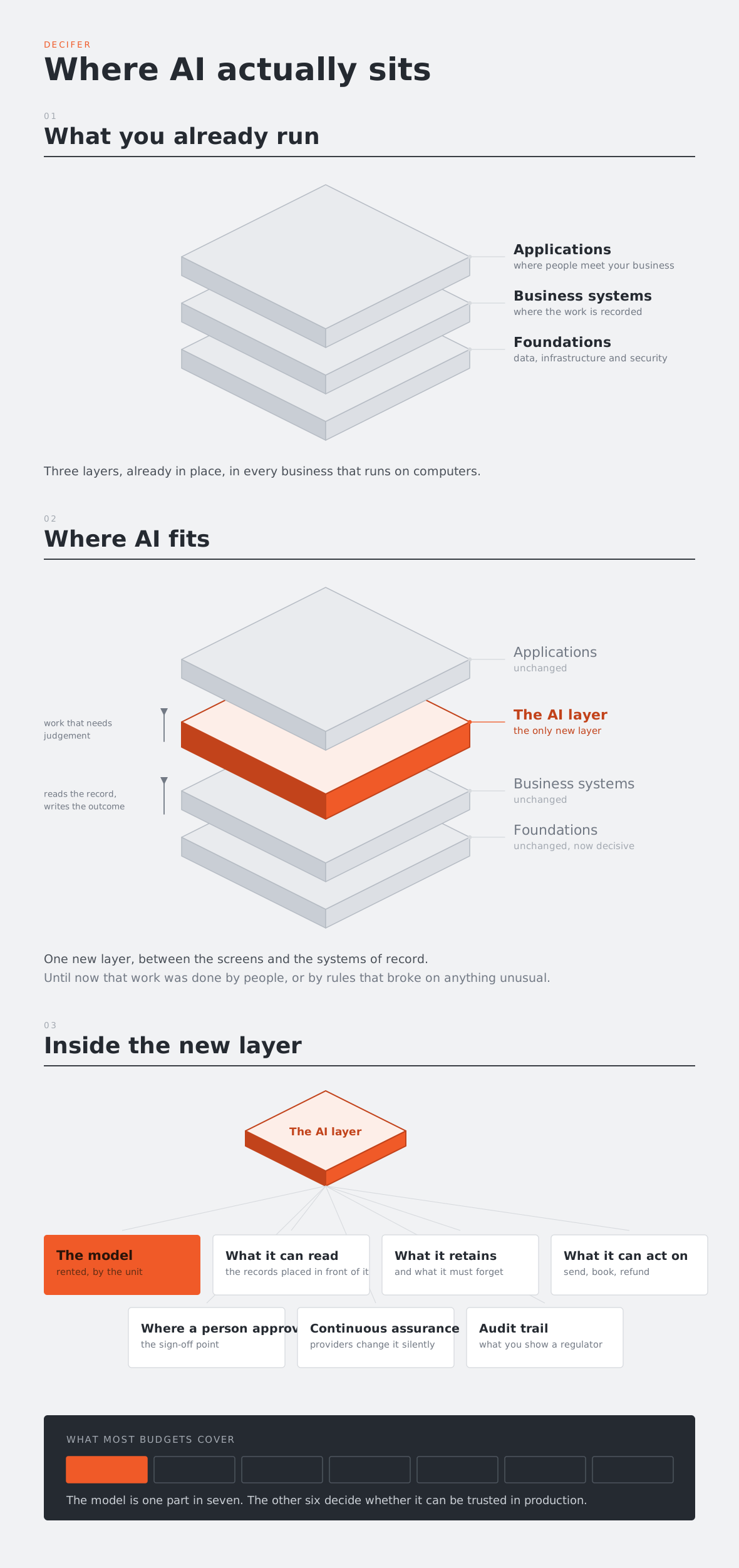
Where AI sits in a business technology stack: three layers you already run, and one new layer between the screens and the systems of record.
Open the full-size diagram- 1
The three layers you already have
Applications where people meet your business, the systems where the work is recorded, and the data, infrastructure and security underneath. Every business running today has all three, whether or not anyone has drawn them.
- 2
The one layer AI adds
A layer that takes the work needing judgement, reads the record, and writes the outcome back. It sits between the screens and the systems. It does not replace either.
- 3
That layer, opened up
Seven parts: the model, what it can read, what it retains, what it can act on, where a person approves, continuous assurance, and the audit trail. The model is one part in seven, which is why choosing a model is one decision in seven.
Diagram 2
How an AI system is actually put together
The same architecture behind every system on this site, drawn once: what happens to a single request from the moment it arrives to the moment the answer goes back.
How the pieces connect: a request is assembled, sent to the model, checked and acted on, drawing on memory, a model gateway and tools, with control running across all four steps.
Open the full-size diagram- 1
Four steps, in order
Assemble the context, ask the model, check the answer, take the action. Every request follows the same four. A system that skips the third step is the one that puts an invented figure in front of a customer.
- 2
What the steps draw on
Memory, a model gateway holding more than one model with routing and fallback, and a set of tools the system is allowed to use. The gateway is why a model going down is an incident rather than an outage.
- 3
The control rail
Guardrails, human approval, evaluation and an audit trail run across all four steps rather than sitting at the end. Control is not a gate the answer passes through last; it is present at every step or it is not present.
- 4
What it reads and writes
The systems the business already runs on: bookings, quotes, client records, and the data infrastructure beneath them. The AI layer uses the same paths a person does, which is what keeps one audit log rather than two.
Use the diagrams on your own systems.
The second diagram is a checklist as much as a picture. Take one process you are considering automating and put it through the four steps: what context gets assembled, what the model is asked, what checks the answer, and what action it is allowed to take.
The argument behind the drawings
Both diagrams were drawn for one article: what a single AI answer is made of, which parts you rent, which part you have to build, and the three ways this supply chain behaves unlike any other you run.
Read next
The AI supply chain: what you are actually buying
Most AI decisions go wrong because nobody has drawn the supply chain. Here is what one AI answer is made of, which parts you rent, which part you have to build, and the three ways this supply chain behaves unlike any other you run.
Read the articleSee how it is built
The same nine stages run behind every one of these, with the boundary between what code does and what a model does written down before anything is built.